Daphne Matthews
  • Blog
  • About
  • Contact

Welcome to the Gambler Series
Dark, Erotic Fiction

Who would want this as an origin story?

A story that includes attempted theft, then being forced to abandon everything that's known and familiar?  A story that includes rope, knives, and handcuffs?

Turns out, Dani Santoro is all for the second part, but she has to survive Seth's temper first. Running away with him will upend her entire life and change everything - including her name - but it may just be worth it. It may just fulfill every secret fantasy she's ever had.

You need someone to tell you what to do, and I like telling you what to do.

Can she really give him everything? Will he take it?


Series features strong themes of dubious consent, consensual non-consent, D/s, BDSM, some non-consensual assault (Aces and Spaces), and violence (Riding It Out). 

If that excites you, intrigues you, or turns you on, please proceed. Otherwise, feel free to turn back now.

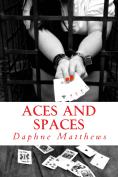
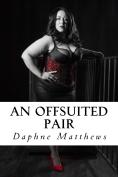
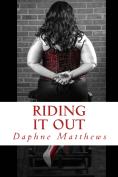
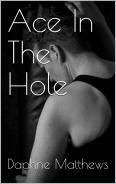
​Click the images below to find each book on Amazon.


Series includes: 
Backed Into a Hand - the origin story
Aces and Spaces - sometimes one rule is too many
An Offsuited Pair - a journey into CNC romance
Riding It Out - all hell breaks loose
Ace in the Hole - Seth's side of things
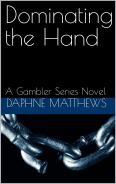
Dominating the Hand ​- the conclusion
Dealer's Choice ​- standalone short novel. Dark CNC
Picture
Latest release!!

The new year has brought only tragedy to Joe Connolly. First, his sister Hannah ends her own life, then a dear friend is involved in a near-fatal car accident, and it's only February.

​2020 has to get better right?

Maybe. Enter Emily Cooper. Daughter of a prominent local chef, she shares Joe's tastes in all the right things - food, wine, kinks. She's even supportive of his asexuality. 

But will Joe's grief overpower their new relationship? And can Emily emerge from her father's shadow to pursue her own dreams? They will have to endure a year of unprecedented challenges in order to find love.


CW for extensive discussion on mental health including suicide, family drama, and all things, well, 2020.

Also features some D/s and BDSM but not as extensive as the Gambler Series. Looking for more romance and less kink? This one is for you.

Why Safewords Alone Are Unreliable

1/4/2021

0 Comments

 
The short answer –
By themselves, safewords are vague and give an inadequate amount of information.

The longer answer –
Safewords, people in the kink community will tell you, are one of the foundations of kinky play. They should be agreed to early on and no one should be afraid to use them – top, bottom, switch, etc. How will your partner know that something is wrong if you don’t yell out “red” or “pomegranate” in the middle of a scene?

But what do these words really convey? What does “red” or “stop” or whatever you have decided on, mean? What happens when they are invoked? Having a safeword is an excellent start, but it is only part of what should be a much larger conversation.

I know, this isn’t what anyone wants to hear when they’re excited about jumping into play. But understanding why people safeword, how they safeword, and their expectations after safewording can save a lot of headaches later on.

Why Safeword?
The reasons for invoking a safeword are as varied as the people involved in scenes. And yes, this goes for the person topping as well as the person bottoming. Anyone can safeword at any time. Reaching a pain threshold, medical emergencies, hitting a mental trigger, or someone crossing a negotiated boundary are all valid and excellent reasons for stopping or pausing a scene. Maybe you’re just not feeling it or are uncomfortable for some reason. Doesn’t matter. No one should feel pressured to continue if they don’t feel safe.

How to Safeword - 
When I think of safewording, the image that leaps to mind is someone on the receiving end of pain who has suddenly had enough, is self-aware enough to know this, and yells out RED! All action stops, partners calmly and rationally talk about what went wrong, the bottom’s needs are attended to, and everyone goes on with their lives.

This is the industrial training film version – contrived, unrealistic, and unlikely to ever happen in the wild.

I am a bottom and a masochist. I also have the combined stubbornness of Italian, German, and Irish genes. I will grin and bear whatever you come at me with and find a way to be okay with it.

That’s not always okay, by the way. And in my many years of experience, I have technically only safeworded once. I said “red” to end a scene because the pain had stopped being fun. Even then, I needed help in saying the word. I often protest with words like “don’t,” but my pleas had taken a serious shift. Noticing this, one of my tops guided me to the one that would stop everything.

“That’s not the safeword,” he said gently. “You know what the safeword is…what is it?”

“Red,” I told him. It wasn’t loud, but he heard me. And, just like in the training film version, everything stopped, I was guided to the floor, and attended to.

I learned a lot about myself from that scene. Later, I would realize how crucial having two competent tops had been. Someone else might have ignored me, waiting only for that one word without realizing that I couldn’t get there on my own. Someone else might not have known how to communicate with someone in my condition.

Yes, I was lucky. Nothing about that memory is a negative for me. Even the resulting bruises that lasted more than a month.

And from then on, I’ve been able to tell tops that if I hit that alternate headspace some of us go to in order to process pain during a scene – usually called subspace – I am unlikely to offer information. I don’t quite go nonverbal because I can answer questions when asked, but I can go deep into my own head.

And this is important. There can be a point – maybe especially for us masochists – where you barely feel the pain anymore. And it is at that point that damage can occur without anyone realizing it. Expecting someone to be aware enough to verbalize that a scene has gone too far can be unrealistic. Tops and bottoms need to pay attention to responses and know how to deal with them.

Of course, not being able to speak can be physical as well as mental. If gags are involved, how can someone be expected to safeword? Make sure you have alternatives to speech – examples I’ve seen is having the bottom hold a rubber ball, keys, or something else that will get the top’s attention when dropped.

Something that has been key for me has been check-ins during a scene. These can be tricky, especially when you’re in that really good groove and everything seems to be going great. Stopping to ask your bottom “are you still okay?” can break the mood.

My favorite method of checking in? Squeeze my hand. If I squeeze back, I’m good. If I’m slow to, or don’t at all, I probably need more attention. It’s effective at gathering information and doesn’t break the flow of a scene.

Finally, I may be stubborn but there are signs that even I can’t ignore. I like to tell tops that I am more likely to call “foot cramp” than “red.” In other words, I prefer plain language that makes my needs clear.

And while I may have only used “red” once, I have lost track of how many times I have said “that rope is too tight” or “I need to be in a different position.” If possible, I shift and make these adjustments myself. If I can’t, it’s time to get my top involved.

And that’s what “red” doesn’t convey. There’s no nuance to “red.” It’s vague. All it says is that something is “wrong.” But what if it’s not some big emergency? What if it is and you end up needing medical attention?

Find out what “red” – or whatever safeword you decide to use – means. Make sure everyone is clear on this definition. Know that this definition may change depending on who you are playing with. Expectations are crucial.

What to Expect After Safewording
As stated, a break in the action may be just that – a break. Shift the ropes, change the implement being used, and move on.

For a lot of people, “red” means “stop the scene.” For others, it means “enough with the cane already, motherfucker!”

If one of you says “red” expecting that all action is going to stop – and the other person grabs a paddle instead of the cane – there’s going to be a problem. Make it clear up front what you mean by “red.” Does it mean stop everything or stop that particular action?

Definitions are important but know that those definitions are going to be slightly different for everyone. Red may be a signal that something is wrong – but what is wrong, what needs to be done about it, and what happens next needs to be communicated as well.

Conclusion
Again, the answer for me has been to use plain language. If you’re worried about going nonverbal during a scene, there are ways to avoid it – having a top that keeps you engaged with some sort of communication or physical movement can help with this.

But at the end of the day, you have to know yourself. You have to be self-aware enough to know what your needs are and what your typical reactions are. There will always be unexpected reactions, but if you know what’s normal, you will know better how to manage the surprises. It takes time. It takes experience. And it often means moving slowly and experimenting with new sensations.

Communicate. Make sure everyone is on the same page. Only then should you proceed.
0 Comments


Leave a Reply.

    Author

    Daphne Matthews is a former journalist who has been involved in various BDSM communities since 2006. But it is her lifetime of support for Cleveland sports teams that qualifies her as a True Masochist.

    Categories

    All
    Blog
    Consent
    Feminism
    Film And Television
    Kink 101
    Myths Of Kink

    Archives

    April 2023
    March 2023
    February 2023
    November 2022
    August 2022
    July 2022
    June 2022
    May 2022
    April 2022
    March 2022
    June 2021
    March 2021
    February 2021
    January 2021
    December 2020
    November 2020
    October 2020
    September 2020
    August 2020
    June 2020
    May 2020
    April 2020
    March 2020
    February 2020
    January 2020

    Content Warning

    The above works of fiction largely depict consensual kink/BDSM activities among adults. However, in order to reflect real-world scenarios, both Aces and Spaces and Riding it Out feature descriptions and scenes of rape/sexual assault.
     
    Also, An Offsuited Pair features the depiction of a hate crime that results in a death. In retrospect, the situation was probably unnecessary. At the time of writing, I justified it as reflecting reality. I am currently working on more positive depictions and will continue to do so in the future. 

    Finally, Dominating the Hand includes depictions of gaslighting and emotional trauma.

    RSS Feed

Proudly powered by Weebly
  • Blog
  • About
  • Contact